
Developing a source for safe drinking water is of course the basic, essential first step.
However let’s not forget the second part of the challenge; reducing water hauling and related social/economic issues. It is commonly agreed that in order to reduce poverty in developing countries one of the keys for success is to make safe drinking water available AND accessible. Water fetching, hauling or transporting is a major concern… simple solutions for this challenge typically consist of improving ways to haul water. We celebrate, rightfully, the first step of installation of a safe drinking water source in a community, but we have not taken the necessary second step of expanding distribution systems to allow or promote Improved Access to Water.
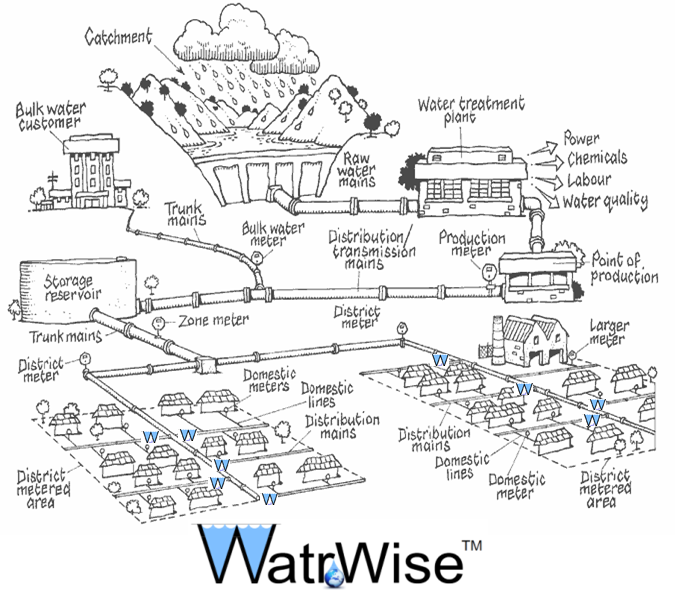
“Just 5% of rural Africans have access to piped water” – The Economist –
“It is not surprising that standpipes and household taps provide a better service than handpumps: they are closer, offset the effort of pumping, and provide safe water. What may be more surprising is the level of demand for this type of service, whose tariff is 10 times higher than a hand pump for a user consuming 10 to 20 litres per day.” – Dr. Christelle Pezon, IRC – The performance of piped water systems versus handpumps in rural growth centres
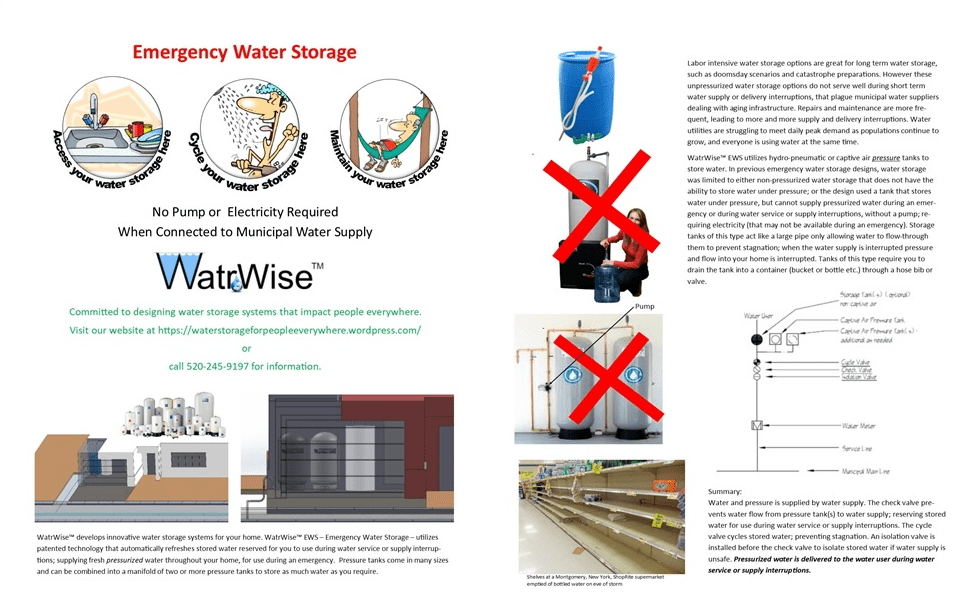
Patented Water Storage
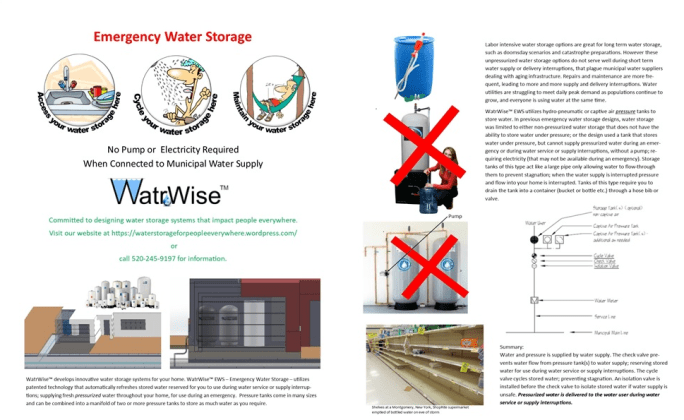
 Reserved Water Storage